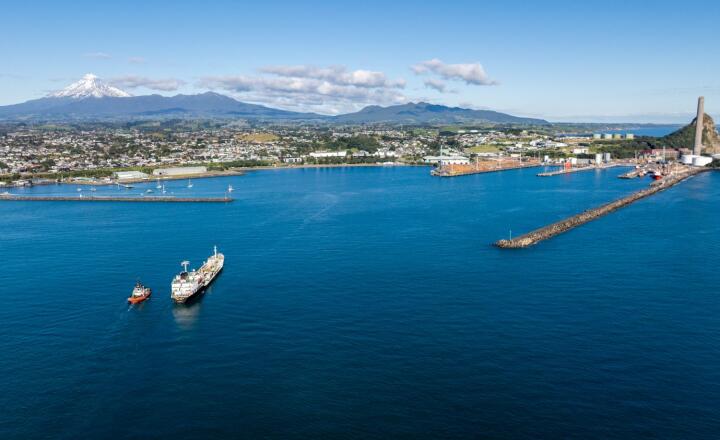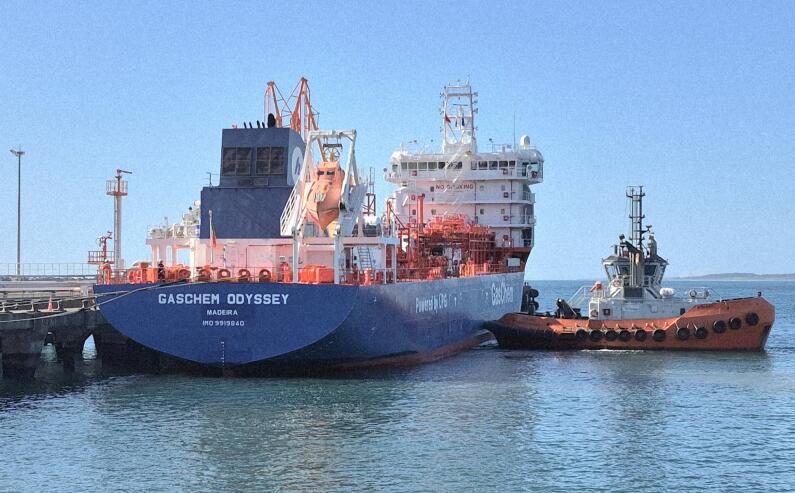
A shipment of LPG is now arriving weekly at Port Taranaki, as Liquigas flips its on-site depot from export to import to meet domestic demand.
Established in the mid-1980s as part of New Zealand’s burgeoning oil and gas industry, the Liquigas depot at Port Taranaki was historically a liquid petroleum gas (LPG) storage and export facility.
All domestic production of LPG came from Taranaki, with the LPG first used to meet North Island demand. The excess was stored at the Port Taranaki depot and loaded onto vessels to supply the South Island depots of Dunedin and Christchurch, and exported to the Pacific Islands.
“As LPG supply reduced, the Port Taranaki facility was used less,” explains Liquigas chief executive Christo Janse van Rensburg.
“This trend has continued over time to the point that now it makes sense to import product to New Plymouth to meet North Island demand.
“The South Island runs on majority imported LPG, which all goes through our facilities, so we’re setting up the North Island in the same way.”
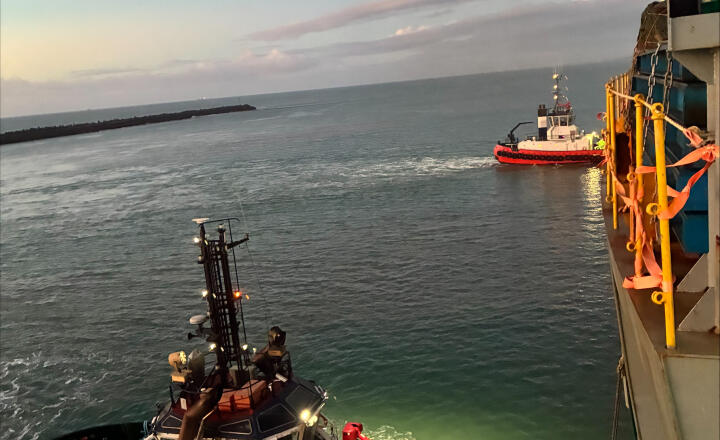
Following several intermittent shipments, the first of the planned weekly shipments arrived at Port Taranaki in May. Gaschem Odyssey unloaded LPG at Port Taranaki, having made previous stops at Christchurch and Dunedin.
Christo says while the change of model was straightforward – “we had the infrastructure in place to reverse the flow from export to import” – Liquigas has upgraded its facility to support the distribution of the LPG, which comes from Australia.
“We modified the depot to be able to load out trucks quickly and efficiently when the ships come in, and are now ramping up the imports as winter is the busy period for LPG, when it’s used more for heating.
“The Port Taranaki depot holds 1,000 tonnes, and at some stage we’ll have to upgrade further to receive more frequent imports,” Christo says.
Liquigas expects to have about 10 trucks a day load and head off for bottling facilities and bulk customers throughout the North Island.
“For Liquigas it means our future is bright, and our volumes are increasing through New Plymouth.
“We’re here to support New Zealand’s energy needs going forward. The reality is we need energy in the country, and if we can’t produce it locally then we have to bring it in.
“It’s really exciting for our business and we’re looking forward to the future.”