The Government is carrying out a procurement process for a liquefied natural gas (LNG) import facility.
The aim is to support New Zealand's energy security, resilience and electricity pricing, particularly during ‘dry years’ of reduced hydro electricity production.
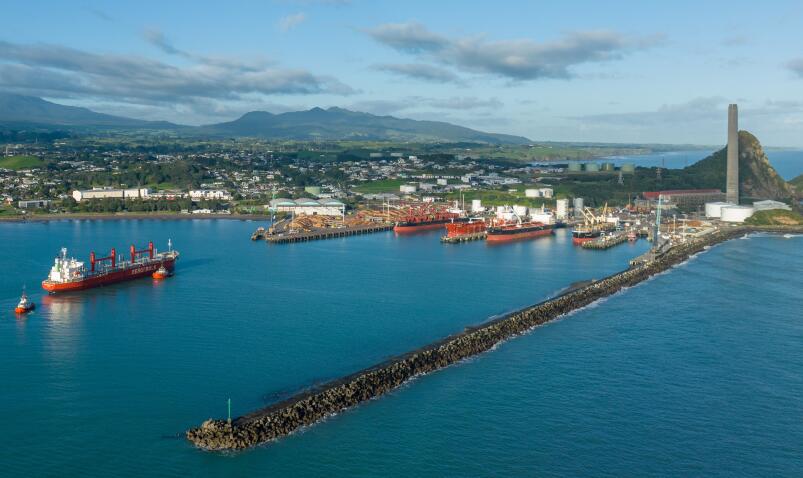
The Government has shortlisted a preferred provider of an LNG import facility at Port Taranaki, and the Ministry of Business, Innovation and Employment (MBIE) is progressing discussions with the provider.
For the project to proceed, it must satisfy all safety and environmental requirements.
This page is designed to provide clear, factual information about LNG and Port Taranaki’s role.
What is LNG?
Liquefied natural gas (LNG) is natural gas that has been cooled to its cryogenic liquid form so it can be transported and stored easily and safely. LNG can be used to:
- Provide a back-up fuel option for electricity generation when needed and fuel existing gas-fired generation.
- Provide a gas supply for businesses and industries that rely on gas, giving them time to consider the best long-term energy solution for their needs.
- Support the build-out of more renewable generation projects, allowing the time and space for these projects to progress.
For more information about what LNG is, go to the MBIE LNG web page here.
Why is the Government considering LNG?
New Zealand has a highly renewable electricity system – about 60% of our electricity comes from hydro (rainfall), and about 30% from other renewable sources (geothermal, sun, wind).
However, we are vulnerable to ‘dry years’, which are periods of time when low rainfall means we can’t rely on the hydro lakes to generate electricity. This can be compounded when other renewable generation sources, such as sun and wind, are also low.
New Zealand uses gas and coal as electricity production support during dry years. But all of New Zealand’s major natural gas fields are in decline and coal can’t fill the gap on its own.
This means there’s a risk that in a dry year:
- Power stations can’t get enough fuel to generate electricity.
- Gas is diverted to electricity generation leaving other users short.
- We have electricity shortages and/or high prices.
Therefore, LNG imports are being considered as a way to support the electricity system during dry years until other forms of 'firm generation' can provide that cover.
For more information on the future role of renewables and renewable energy projects, go to the MBIE LNG web page here.
.
How does an LNG import facility work?
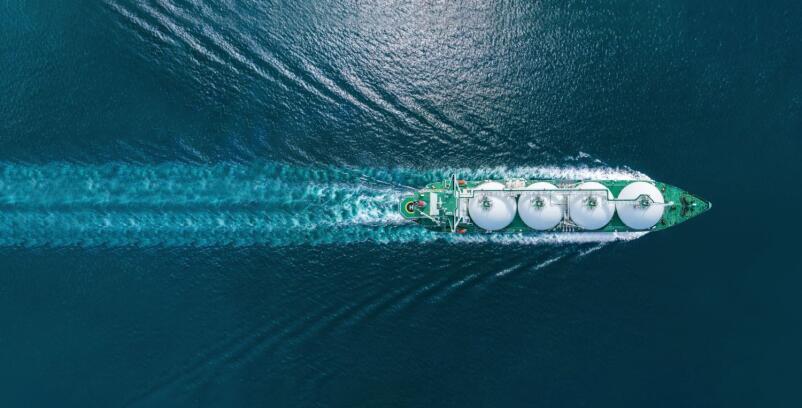
Importing LNG is a well-established practice around the world.
LNG is transported in ships at -160 degrees - its cryogenic liquid form. At the import location, the LNG is 'regasified' or warmed into its gas form, and then sent to the gas distribution network.
This natural gas is the same as the natural gas that is produced in Taranaki and supplied via pipeline across the North Island.
The preferred provider is proposing floating storage and regasification facilities inside Port Taranaki, involving:
- A moored vessel that can store LNG and is capable of regasifying and distributing natural gas into the transmission pipeline when required.
- Another vessel that carries LNG from suppliers overseas and delivers the LNG to the moored vessel.
The moored vessel is expected to be located along the Main Breakwater at Port Taranaki.
Who’s leading the project?
The Ministry of Business, Innovation and Employment (MBIE) is leading and managing the procurement process.
If an import terminal project goes ahead, the provider will build, own, operate and maintain the import terminal. MBIE and Port Taranaki will provide support during the process.
The provider will engage with the Taranaki community and users of the marine area on safety, environmental and cultural considerations.
The LNG itself will be procured separately from the procurement of the import facility.
What’s Port Taranaki’s role?
Port Taranaki has supported the oil and gas industry for decades and has experience, skills and infrastructure that can support LNG imports. The Māui national gas transmission pipeline, which the regasified LNG will flow through, also runs near the port.
MBIE is progressing discussions with a preferred provider of an LNG facility, with the proposed solution at Port Taranaki (see 'How does an import LNG facility work?' above for more detail).
While the procurement process continues, the identity of the preferred provider and the confirmed location and configuration of a facility at the port are commercially sensitive and have not been publicly disclosed.
To be clear, Port Taranaki is not a developer – we are a facilitator of trade.
Throughout the process, Port Taranaki has provided port-specific information to MBIE and to prospective providers as they have formed their import facility proposals.
This continues with the preferred provider, enabling and supporting surveys and other investigative ground and harbour work.
We have set up an LNG project team within our business to ensure we can provide information quickly and are ready to support the work should the Government go ahead with an LNG import facility.
What about LNG safety?
At Port Taranaki, safety is our priority.
We operate on behalf of the community and as part of it, so before any operation proceeds at Port Taranaki we need to be satisfied that all health, safety and environmental matters have been addressed.
At Port Taranaki, the transfer of petrochemicals, such as natural gas and LPG, always follows strict safety procedures and adheres to international safety protocols.
We appreciate there are some concerns in the community about the safety of an LNG facility near homes, businesses and schools.
MBIE states it will not recommend that the Government signs a contract for an import facility that MBIE or external engineers have any safety concerns about.
The provider will need to provide a design notice to WorkSafe for feedback, and then a full safety case that will be accepted or declined.
The facility will not go ahead unless the safety case is accepted.
Port Taranaki will also put the safety case under scrutiny, including hazard analysis, prevention, and emergency response, alongside environmental impact analysis.
Should it proceed, the LNG import facility will follow strict safety regulations and controls – including for the vessels, transfer, storage, regasification and transmission.
Risk management 'buffer' zones
An initial safety evaluation was undertaken as part of the short-listed providers' feasibility work.
The preferred provider will carry out detailed health and safety assessments through the safety case process under the Health and Safety at Work Act 2015. The safety case will need to be accepted by WorkSafe.
This includes a quantitative risk assessment which is location-specific and will cover the facility and all phases of its operation, as well as generating risk contour lines (or ‘buffer' zones).
It is inappropriate to estimate the exact size of the buffer zones ahead of this detailed safety case process. The size and details of the buffer zones will be determined independently to the procurement process, once it has been completed.
From assessments to date, it is unlikely that the buffer zones will impact access to Ngāmotu Beach, the Lee Breakwater, or the surrounding community.
For more about how MBIE will assess safety aspects of a LNG import facility, click here.
Here are some safety facts from MBIE’s LNG web page:

Import v export LNG terminals
In the media and on social media, examples of LNG terminal accidents overseas have been used to highlight concerns regarding safety.
While we appreciate there are genuine concerns in the community, it’s important the information presented is factual and correct.
The proposed facility at Port Taranaki would be an import terminal, whereas an accident highlighted in Algeria (2004) was at an LNG export terminal, and an incident in Qatar (2026) was at a gas processing plant that produces natural gas for the domestic market.
LNG import terminals are fundamentally different facilities to LNG export terminals and domestic gas processing plants.
The accidents in Algeria and Qatar were at facilities that perform different functions, use different equipment and operate under different process conditions to what is relevant to New Zealand’s proposed LNG import terminal.
What about the environment?
The marine environment is our means of doing business, a key community asset, and, most importantly, the home of marine and bird life, so we want to ensure it is healthy and safe for all.
Before any operation proceeds at Port Taranaki we need to be satisfied that all health, safety and environmental matters have been addressed.
Here is some environmental information from MBIE’s LNG web page:

What’s next?
The Government has identified a preferred provider of an LNG import facility.
In October 2026, the Government confirmed it would not sign a contract for an LNG import terminal before the 7 November 2026 general election.
It aims to finalise a decision following the formation of the next Government.
Port Taranaki continues to provide information to the preferred provider and provide access to the port for land and sea surveying and assessments.
Our LNG team is focused on being prepared if a project goes ahead.
.
Share your thoughts on the proposed LNG import terminal
Port Taranaki is committed to providing clear, factual information about the proposed LNG import facility.
We encourage you to share your views with us. Your input will help inform our ongoing communications.
Click here: Provide feedback